Please fill out the form below to request a quote or to request more information about us. please be as detailed as possible in your message, and we will get back to you as soon as possible with a response. we're ready to start working on your new project, contact us now to get started.
Insulation Piercing Connectors For Low-Voltage Aerial Bundled Cables
2026-10-17
NSPV
9
Unlocking Efficiency: Insulation Piercing Connectors for Low-Voltage Aerial Bundled Cables
In an era where reliable electricity distribution is paramount, the choice of connections can significantly influence the efficiency and safety of power delivery systems. Our latest article delves into the innovative world of insulation piercing connectors (IPCs) and their vital role in optimizing low-voltage aerial bundled cables (ABC). Discover how these advanced connectors not only enhance connectivity but also improve the overall resilience of power infrastructure. Whether you're an industry professional, a contractor, or simply curious about the future of electrical connections, you'll find valuable insights into the technological advancements and practical applications of IPCs. Join us as we explore the key benefits, installation techniques, and best practices that can transform your approach to modern electrical systems. Your journey toward enhanced power reliability starts here!
1. Low-Voltage Distribution in Off-Grid & Hybrid PV; 2. How Aerial IPCs Connect Main Lines to Branches; 3. Insulation Stripping Elimination and Weather Seals; 4. Mechanical Tensile Strength and Wind Resistance; 5. Installation Best Practices for Overhead Wires
The advancement of renewable energy technologies has led to an increased focus on low-voltage distribution systems, particularly within off-grid and hybrid photovoltaic (PV) setups. The effective transmission of power over distances where underground installation is impractical has made aerial bundled cables (ABC) a popular choice. Key to optimizing these systems is the use of Insulation Piercing Connectors (IPCs), which enable reliable connections while minimizing the need for extensive striping and sealing of insulation.
1. Low-Voltage Distribution in Off-Grid & Hybrid PV
In off-grid and hybrid PV systems, the efficiency of energy distribution is paramount. Low-voltage distribution is particularly essential due to the reduced need for high-tension lines, which significantly lowers installation costs and labor. Aerial bundled cables are often deployed in these scenarios since they reduce the risk of short-circuits and are less susceptible to weather-related damage. The use of insulation piercing connectors simplified the connection process, allowing installers to maintain the integrity of the ABC while ensuring robust electrical connections. Unlike traditional methods, which require extensive insulation stripping, IPCs utilize advanced mechanical technology to pierce the insulation of the cable, effectively establishing contact without the risk of damaging the core conductor.
2. How Aerial IPCs Connect Main Lines to Branches
Aerial IPCs serve as the backbone for connecting main power lines with branch circuits in overhead distribution networks. These connectors are engineered to offer quick and effective teaming between conductors, generating a secure and efficient junction for power flow. Typically designed to withstand variations in the thermal environment, IPCs employ a shear-head bolt mechanism that guarantees a consistent torque and contact pressure when the connection is made. This innovation not only simplifies installation but also enhances reliability, positioning IPCs as a key component in modern power distribution systems. By allowing multiple branches to seamlessly connect to a main line, aerial IPCs help optimize the distribution of electrical energy across wide areas, ensuring that remote locations can efficiently harness energy from their hybrid PV systems.
3. Insulation Stripping Elimination and Weather Seals
One of the significant advantages of aerial IPCs is the elimination of insulation stripping, fundamentally changing standard installation practices. IPCs penetrate the insulation layer on the bundled cables, which maintains the weather-tight integrity vital for outdoor applications. This feature is instrumental in preventing moisture ingress and promoting longevity in environments subject to fluctuating conditions. For installations in harsher climates, the insulation piercing connectors' weather seals ensure a robust barrier against moisture and dirt, thus preventing degradation of the electrical connections. This durability means that instrumentation and maintenance can happen less frequently, a considerable boon for remote off-grid installations where access could be a logistical challenge.
4. Mechanical Tensile Strength and Wind Resistance
The design of aerial IPCs places a significant emphasis on mechanical tensile strength, which is crucial for overhead applications where wires can undergo considerable tension due to environmental conditions. These connectors are constructed from high-quality materials engineered to withstand not just the weight of the cables, but also forces exerted by winds and adverse weather. Reliable mechanical strength reduces the risk of catastrophic failure, providing peace of mind to installers and operators alike. Additionally, the incorporation of advanced engineering principles ensures that the connections offer exceptional wind resistance, crucial for sustaining power delivery, particularly in regions prone to high winds.
5. Installation Best Practices for Overhead Wires
Employing best practices during the installation of IPCs is critical to ensure safety, reliability, and longevity of overhead solar taps and low-voltage distributions. Installers must familiarize themselves with the appropriate shear-head bolt torque to achieve optimal connection pressure without over-tightening, which can lead to damaging the conductors or connectors. Proper alignment of cables before securing connections can significantly enhance mechanical stability. Moreover, safety measures such as using personal protective equipment and ensuring that all installations meet local regulations and standards cannot be overstated.
Furthermore, meticulous planning involving the selection of suitable aerial bundled cables, combined with the strategic placement of IPCs, will maximize performance while minimizing system losses. Recognizing potential challenges such as terrain and weather conditions during manual installation contributes significantly to the overall success of the deployment.
In conclusion, insulation piercing connectors play a pivotal role in the reliability and efficiency of low-voltage aerial bundled cable systems. From their seamless integration in off-grid setups to their enduring resilience in adverse weather conditions, IPCs represent a significant stride in the distributed energy landscape. Their importance cannot be overstated, as they ensure that renewable energy solutions can efficiently deliver power where it is needed most.
Conclusion
In conclusion, as a company with 15 years of experience in the industry, we understand the critical role that insulation piercing connectors play in the efficiency and reliability of low-voltage aerial bundled cables. Our extensive expertise has guided us in staying ahead of the curve, delivering innovative solutions that meet the evolving needs of our clients. We recognize that the right connection is essential for seamless energy distribution, and our commitment to quality and performance ensures that your projects are in capable hands. As the landscape of electrical infrastructure continues to change, we remain dedicated to providing cutting-edge products and unparalleled service. Partner with us and experience how our insulation piercing connectors can enhance your operations, secure in the knowledge that you are backed by a knowledgeable team with a proven track record. Together, we can pave the way for a brighter, more connected future.
GET IN TOUCH WITH Us
recommended articles
insulation piercing connector
insulation piercing connector solar
solar IPC connector
1500V insulation piercing connector
PV insulation piercing connector
insulation piercing connector 1500V
IPC connector for solar cable
solar cable piercing connector
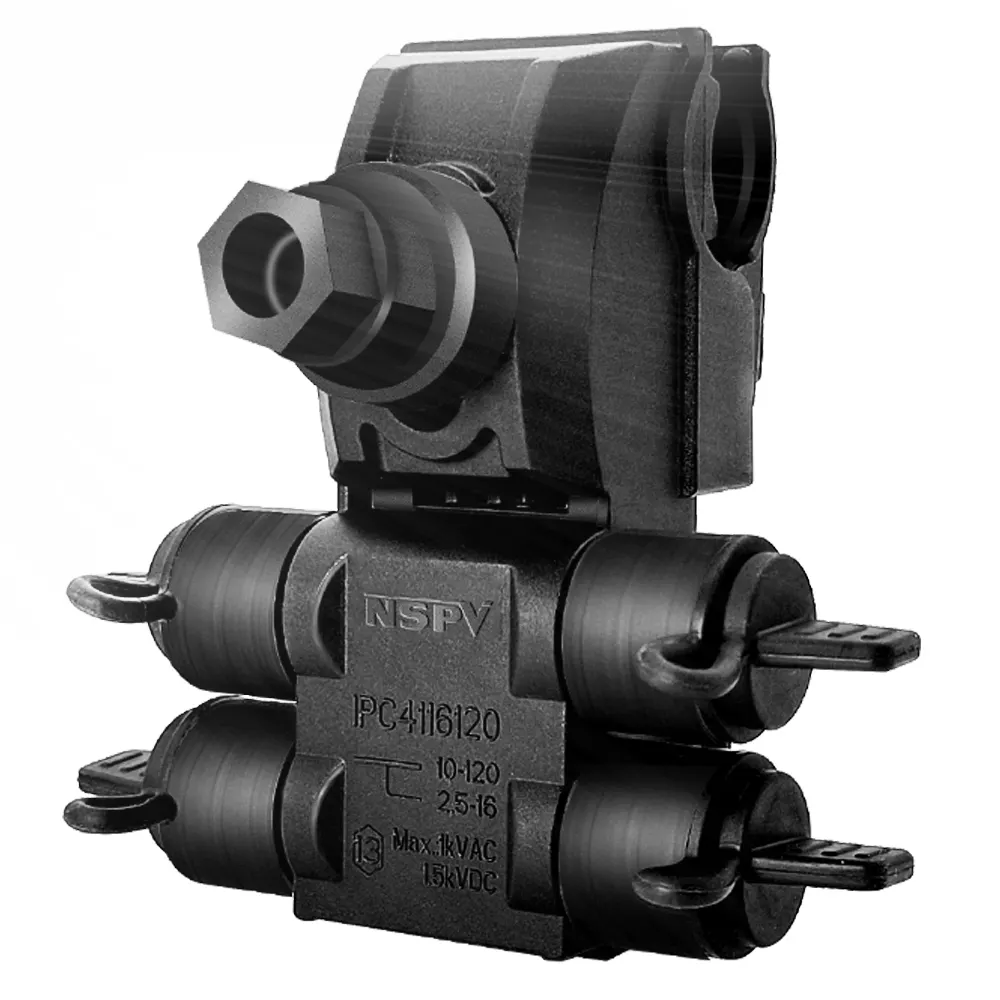
NSPV's Insulation Piercing Connector ( IPC Connector ) IP65 waterproof, UV resistant, Dust resistant, Outdoor 25 years service time,Coastal Corrosion Protection
An Insulation Piercing Connector (IPC) is an advanced electrical connector designed to create a secure, reliable, and safe connection between two conductors without the need to strip their insulation. It is commonly used in low-voltage distribution networks, overhead lines, and solar photovoltaic (PV) systems.
 Address: 14F,12Building, No.52 Fuhai Road,Xiagang,Chang'an Town,Dongguan City,Guangdong,China
 info@new-pv.com
ben_he@new-pv.com
 Tel: +86-769-85371660
 Fax: +86-769-81871001